Three kinds of stillness and flight
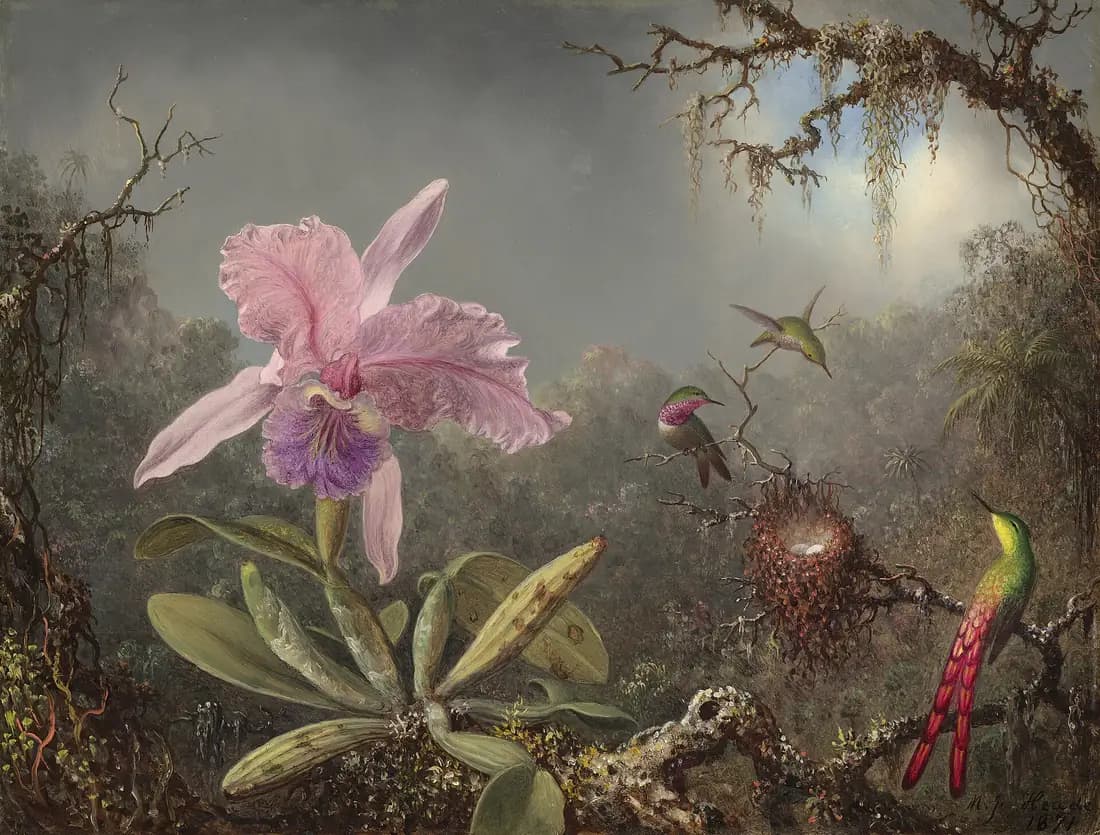
One hummingbird perches, another hovers near the flower and a third hangs deeper in the haze. Their positions create a sequence without becoming a scientific chart. The orchid's curling petals answer wings and tails, making plant and birds variations on delicate suspended form.
Field study becomes fantasy
Heade visited Brazil in the 1860s and studied hummingbirds for a proposed book called The Gems of Brazil. He observed specimens and habitats closely, but his orchid-and-hummingbird paintings were composed later. Species, bloom and atmosphere need not have met exactly as shown.
A tropical world made intimate
Many nineteenth-century painters presented tropical landscape through panoramic scale. Heade moves close. Moist air and distant vegetation remain, but attention gathers around one flower and three small bodies. The approach creates wonder while also reflecting an era when tropical nature was collected, classified and transported for northern audiences.
A miniature encounter at life scale
Heade brings the nearest orchid and birds close enough to study, while mist hides the depth of the Brazilian forest. One hummingbird perches; others hover or turn, giving three distinct states of attention around the flower. Their brilliant throats and the orchid’s pale structure become points of precision within damp, softened air.
The scene looks observed in one miraculous instant, but it combines field experience with studio arrangement. Heade travelled in Brazil and studied hummingbirds closely, then produced paintings that join species with theatrical light and compressed habitat. The format encourages wonder, yet it also reflects nineteenth-century habits of collecting and classifying nature. Intimacy and display are both present in this invented clearing.
Sources and further reading
- National Gallery of Art collection entryObject, Brazil journey, book project and species.
- National Gallery of Art, Martin Johnson HeadeInstitutional artist biography and tropical subjects.