A pose built for a square
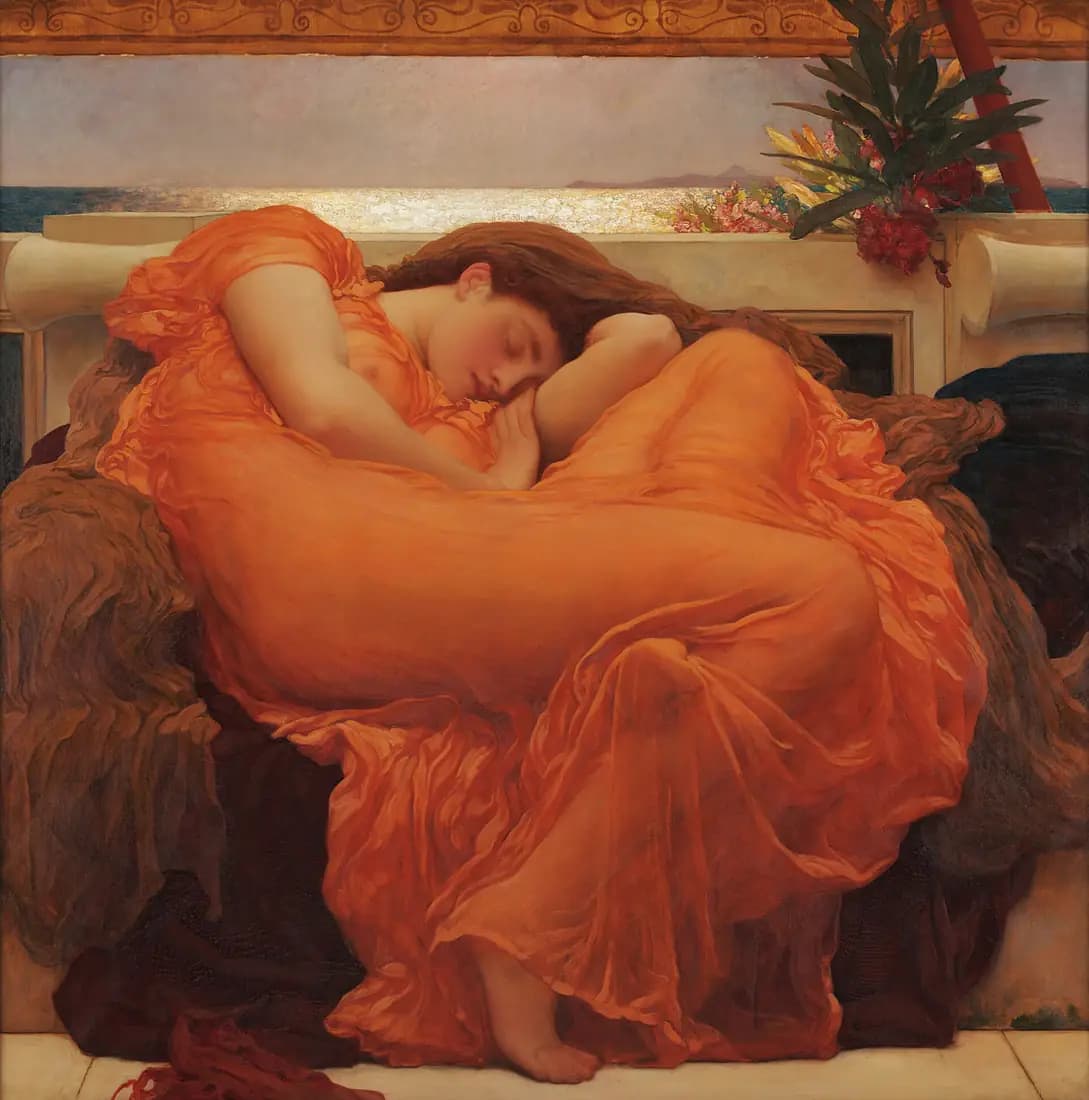
Leighton compresses the figure so that bent leg, torso and arm form a circular movement. Drapery does much of the work, hiding awkward joins and carrying colour across the body. The transparent orange fabric reveals enough anatomy to make the sleeper present while preserving the painting's decorative unity.
Heat made visible
The title does not identify a story. Instead, colour and posture evoke a heavy summer afternoon. Orange seems to radiate against cool grey marble and distant blue water. The sleeper's flushed cheek, bare foot and relaxed hand make heat feel bodily rather than meteorological.
An icon almost lost from view
The oleander at the upper right is often read as a reminder of danger or death, though no single interpretation is certain. The painting itself disappeared from public attention for decades and was considered unfashionable when Luis A. Ferré acquired it in the 1960s. It became the best-known work of the Museo de Arte de Ponce.
A difficult pose made effortless
The sleeping figure folds into a near circle, with one arm beneath her head and a bent leg pressing toward the picture plane. Leighton used preparatory studies to resolve this compressed anatomy. The sheer orange fabric then softens its difficulty, carrying long curves across knees, shoulder and hair until the body reads as one continuous form.
A toxic oleander flower appears above the balustrade, often read as a reminder of death beside sleep. That association is possible, but colour and placement matter just as much. The small pale bloom interrupts the dominant orange and sits near the distant strip of sea. Warm fabric fills the foreground while a cooler, more remote world survives beyond it, making rest feel enclosed and slightly precarious.
Sources and further reading
- Museo de Arte de Ponce collection recordObject, acquisition and collection history.
- Leighton House, Flaming JuneLeighton's late work, composition and historical context.