A flower becomes architecture
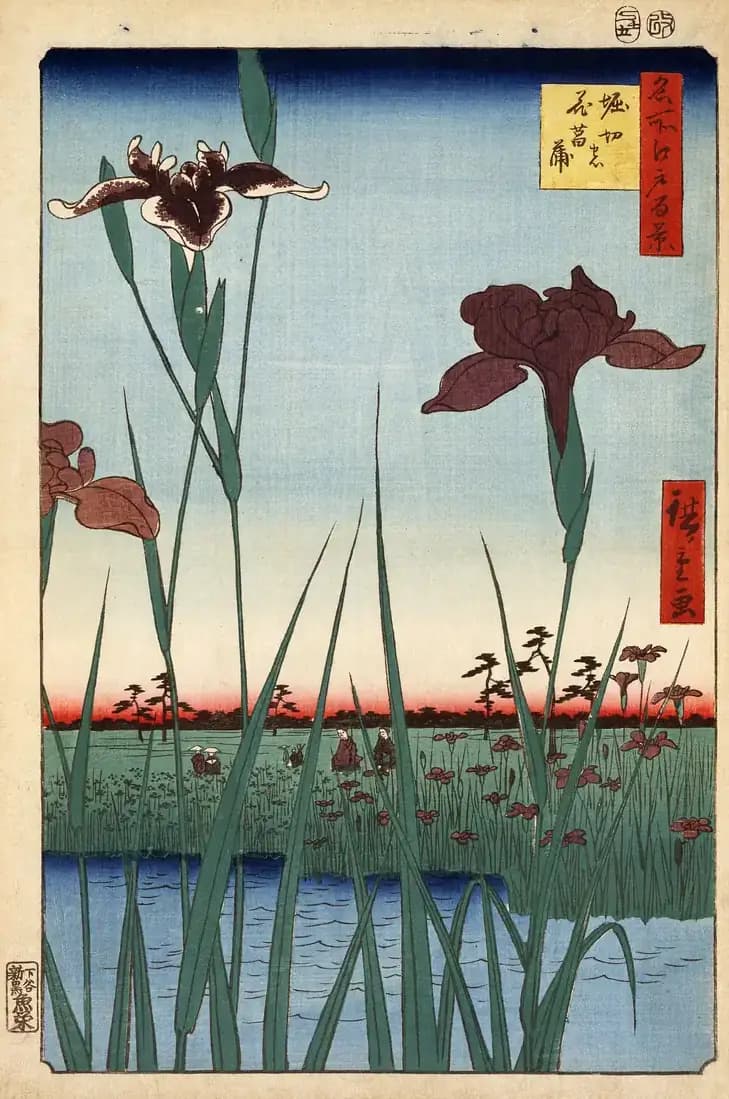
Three close stems divide the vertical sheet. Their petals overlap the view and rise above the horizon, making the iris bed feel as tall as a grove. Hiroshige often enlarged a foreground object this way, but the device is especially apt here: the flower is not decoration around the famous place. It is the place.
A seasonal destination
Horikiri lay northeast of central Edo and was celebrated for cultivated irises. Visitors walked among beds crossed by narrow paths, just as they do in the middle distance. Their hats and robes create a second, smaller rhythm beneath the blue, violet and white petals.
Designed colour, observed variety
Different impressions can vary as printers adjusted pigments and blocks wore down. The composition nevertheless depends on a controlled alternation of coloured flowers and green blades. Hiroshige combines botanical specificity with graphic invention, letting flat printed shapes produce the sensation of looking through a dense living garden.
A garden seen from flower height
The nearest irises rise so high that they interrupt the landscape beyond. Their stems create a screen through which the distant visitors must be found, reversing the usual hierarchy between people and decorative plants. Hiroshige’s crop places the viewer close to the damp ground, where individual buds and open flowers can be compared before the eye reaches the broader field.
Colour separates stages of bloom as much as varieties. Deep blue, pale violet and white shapes alternate against green leaves, while touches of yellow hold their centres. The print does not need to catalogue every cultivar to suggest abundance. Its pleasure comes from repetition with difference: no two silhouettes are placed exactly alike, yet together they make the garden feel continuous beyond the sheet.
Sources and further reading
- Tokyo Fuji Art MuseumObject record, date, dimensions and artist context.
- The Metropolitan Museum of Art collection searchRelated impressions and series records.