Architecture overwhelms the body
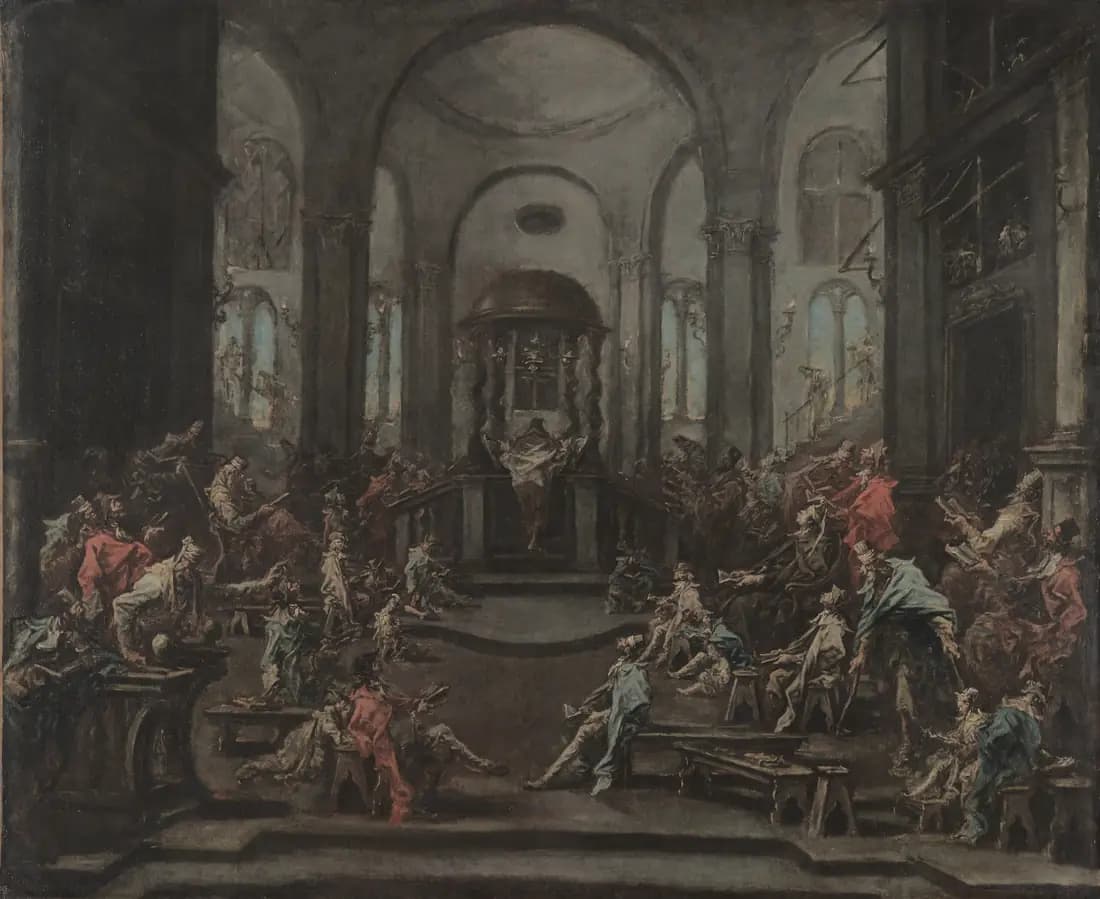
Columns and arches climb far above the congregation, while a deep central aisle draws the eye toward a raised structure. Individual worshippers are narrow and small, but their repeated gestures animate every level of the interior. The space feels at once monumental and crowded.
Magnasco often placed groups of monks, nuns, and other communities inside cavernous settings. The Metropolitan Museum notes that such scenes became among his most popular inventions and were widely imitated.
Brushwork becomes collective movement
The figures are not described with the smooth finish of formal portraiture. Quick lights catch sleeves, heads, and hands, while dark strokes stretch bodies into nervous curves. No single person commands the painting for long. Attention passes through the group as if following the changing rhythm of the service.
This looseness is not unfinished work. It is the means by which the interior appears alive, with movement flashing against stable stone.
The viewpoint belongs to an outsider
Magnasco was not Jewish, yet he depicted Jewish worship. The Cleveland Museum cautions that his knowledge of synagogue interiors and his personal views of Judaism are not securely known. Even the architecture may combine observation with theatrical invention.
That uncertainty should remain visible in any reading. The painting cannot serve as neutral documentation of an actual service, and a claim that it proves religious tolerance would go beyond the evidence.
Look without solving the painter
The work can still tell us how difference was staged for an eighteenth-century audience. Its scale grants the congregation visual importance, yet its exaggerated bodies and mysterious darkness may also make worship appear exotic. Sympathy and spectacle are not easily separated.
A careful encounter holds those possibilities together. We can attend to the central gathering, the repeated gestures, and the force of communal ritual while recognizing that every detail reaches us through Magnasco's uncertain, highly theatrical lens.
Sources and further reading
- Cleveland Museum of Art collection recordExact work, visible service, brushwork, outsider status, and cautions about interpretation.
- Metropolitan Museum of Art, Nuns at WorkMagnasco's popular imagery of religious communities in theatrical, cavernous interiors and its imitation.