After the performance
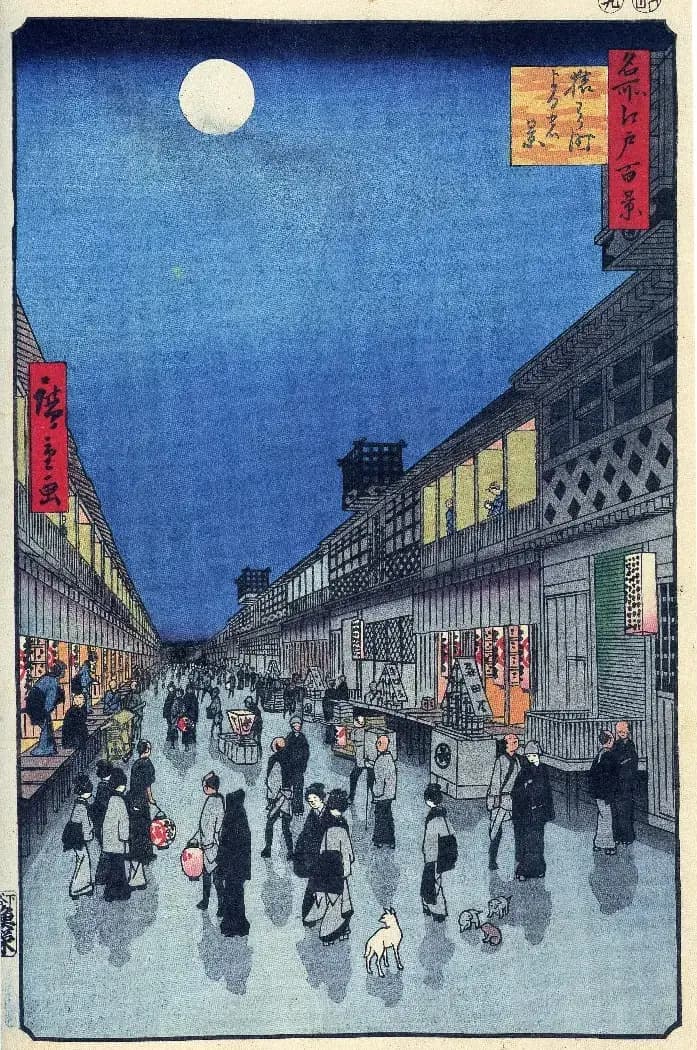
Saruwaka-machi contained Edo's major kabuki theatres after authorities relocated them to the district. Hiroshige shows the street at the end of a theatre day. Small groups move away, porters and food sellers remain active, and shuttered fronts give the entertainment quarter an unexpectedly orderly rhythm.
Shadows do the acting
The full moon is hidden partly behind cloud, yet its light produces sharply extended silhouettes. Those shadows animate the broad central street more strongly than the figures themselves. They also pull the image toward the viewer, countering the façades that recede into distance.
A print designed around darkness
Night required careful gradation rather than a single black field. Deep blue gathers at the top, roofs and façades alternate dark tones, and lanterns punctuate the street. Different impressions may vary in these effects. The result is theatrical without showing a play: light, architecture and departing spectators complete the scene.
Theatre continues outside the theatre
Saruwaka-machi housed Edo’s major kabuki theatres, but Hiroshige shows their street after dark rather than a performance. Large signs and closed facades establish the district, while departing spectators and workers continue its activity. Shadows stretch across the road in the full moon, turning ordinary pedestrians into part of another carefully staged scene.
The print’s geometry is unusually strict. Buildings converge toward a central distance, signs rise as repeated verticals and the moon holds the open sky above them. That order makes small disruptions easy to notice: a carried object, a cluster of figures, a dog near the road. Entertainment has ended indoors, yet the city still offers roles, entrances and exits to everyone walking home.
Sources and further reading
- The Metropolitan Museum of Art collection searchRelated impressions and theatre-district context.
- Brooklyn Museum collection searchInstitutional object and series records.