A tragedy suspended before its end
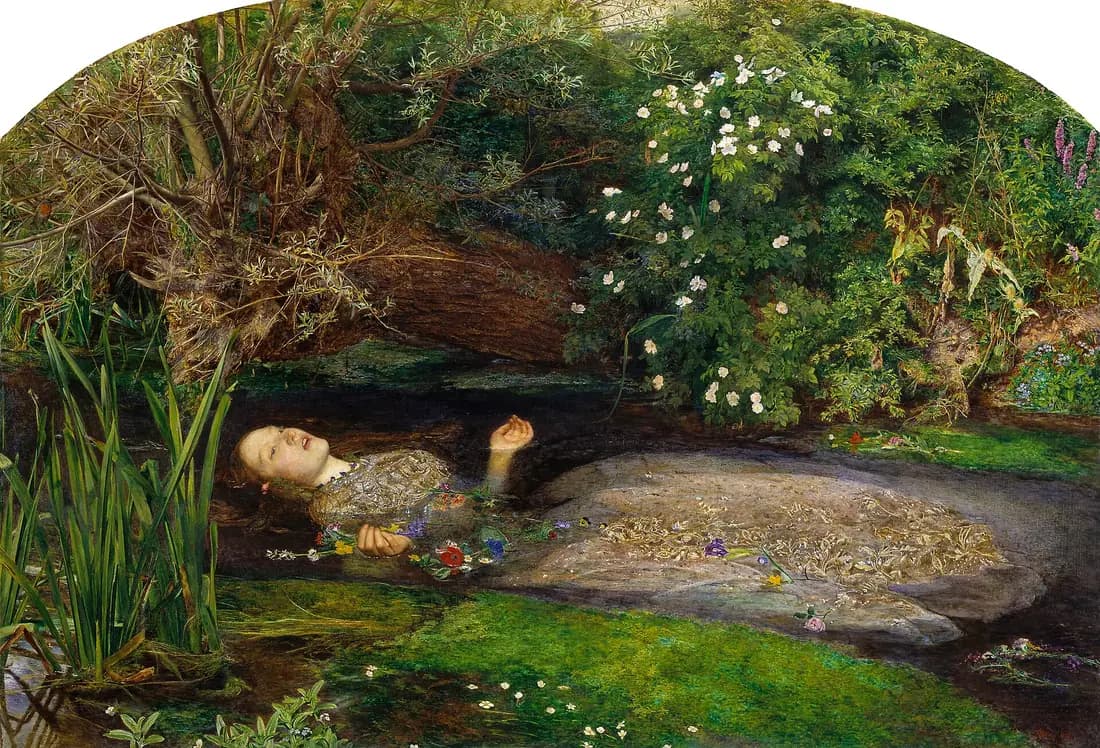
In Shakespeare's Hamlet, Queen Gertrude describes Ophelia singing as her soaked clothes pull her under. Millais chooses that interval. Her mouth remains open, flowers drift from her hand and the dress still supports her. The pose is peaceful enough to be beautiful and unstable enough to remain disturbing.
A riverbank painted leaf by leaf
Millais worked beside the Hogsmill River in Surrey, painting vegetation outdoors with Pre-Raphaelite precision. He complained about insects, weather and long days, but the result gives every reed and flower an observed presence. Nature is not a vague backdrop. Its indifferent abundance intensifies the human story.
Flowers from text and invention
The willow, nettles, daisies and garland connect closely to Shakespeare's description. Millais added other symbolic plants, including the red poppy associated with sleep and death. Botanical identification can enrich the picture, but the flowers are more than a puzzle. Their sharp life, colour and variety press against Ophelia's fading consciousness.
Flowers carry more than one story
Millais painted the riverbank outdoors with extraordinary attention, then added the figure in the studio. Individual plants can be identified, and many have associations with love, remembrance, innocence or death. Yet they are also species growing together in a specific damp place. Symbol and botanical observation reinforce each other instead of belonging to separate worlds.
Ophelia’s pose holds the crisis in suspension. Her dress spreads and still supports her, her palms remain open, and her face appears strangely calm. Shakespeare describes a moment before soaked clothing pulls her under, which lets Millais paint both floating and drowning. The stream is beautiful enough to delay recognition. Once the dark water and weighted fabric register, that beauty becomes part of the unease.
Sources and further reading
- Tate, Millais's OpheliaObject details, subject and flower symbolism.
- Tate, Pre-Raphaelite artInstitutional context for Millais and Pre-Raphaelite practice.