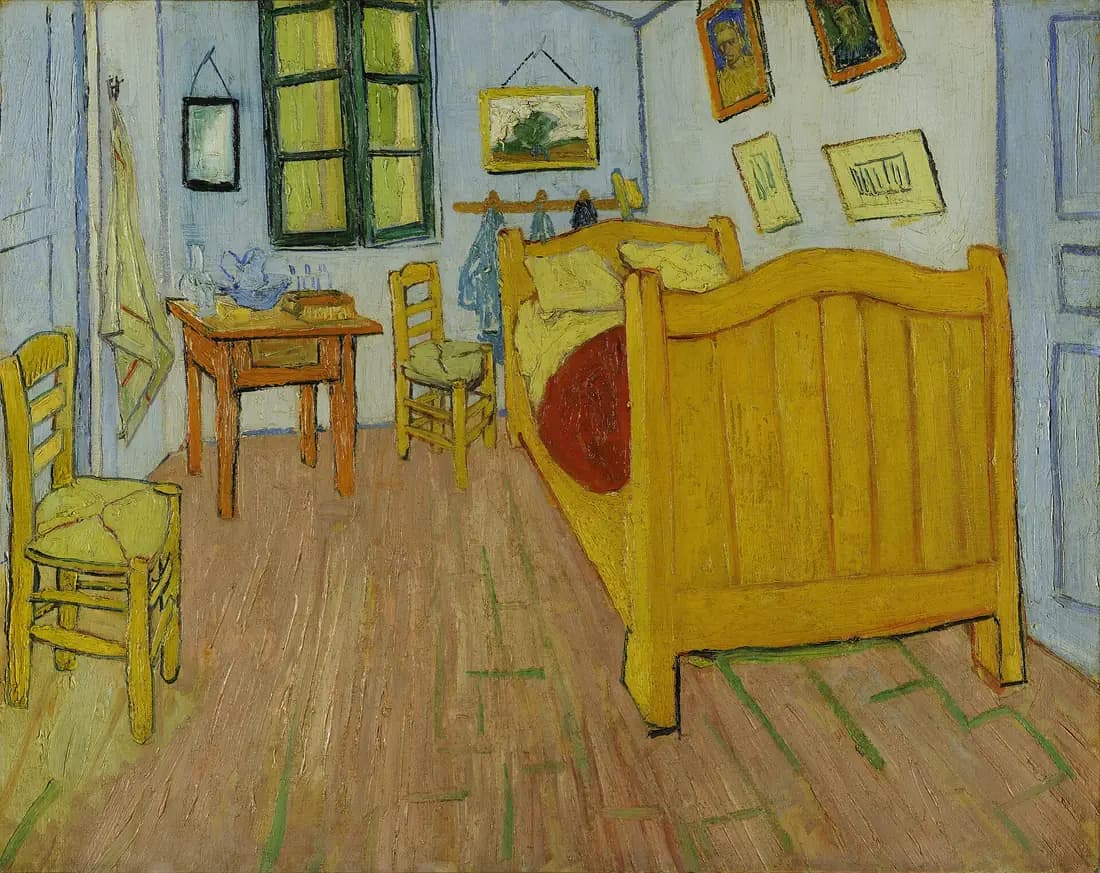
A room meant to offer rest
Van Gogh described the bedroom to his brother Theo in letters, explaining that colour should do the work and that shadows were reduced. Bed, chairs and washstand become clear blocks. The intimate scale and paired objects suggest a room prepared for companionship as well as sleep.
Perspective that will not settle
The back wall is genuinely angled because the room occupied a corner of the Yellow House, but Van Gogh pushes the instability further. Floor, bed and pictures follow slightly different lines. The result is recognisable and impossible at once, like a memory rebuilt through emphatic shapes.
Three versions, changing colours
After water damaged the first canvas, Van Gogh made a second full-size version and a smaller one for his family. Pigment changes have altered all three. Walls he described as pale violet now appear blue, reminding us that the familiar image is not exactly the colour relationship he first intended.
A room tilted toward its visitor
Almost every line leans or changes direction. The bed expands toward us, the chairs sit at different angles and the rear wall refuses a stable rectangle. Van Gogh blamed some irregularity on the actual room, but he also used it expressively. The furniture seems to approach the viewer, making a modest rented interior feel immediate rather than measured.
He described wanting colour to suggest rest. Complementary reds, greens, blues and yellows were intended to work in broad, simplified areas, with shadows reduced. Pigments have changed, so some hues visible today differ from the original balance. The calm Van Gogh sought is therefore not the calm of perfect geometry. It comes from giving each familiar object a clear place inside an intensely personal room.
Sources and further reading
- Van Gogh Museum, The BedroomFirst version, letters, intended colour and room.
- Musée d'Orsay collection searchThe 1889 version and object history.