A performance made from waiting
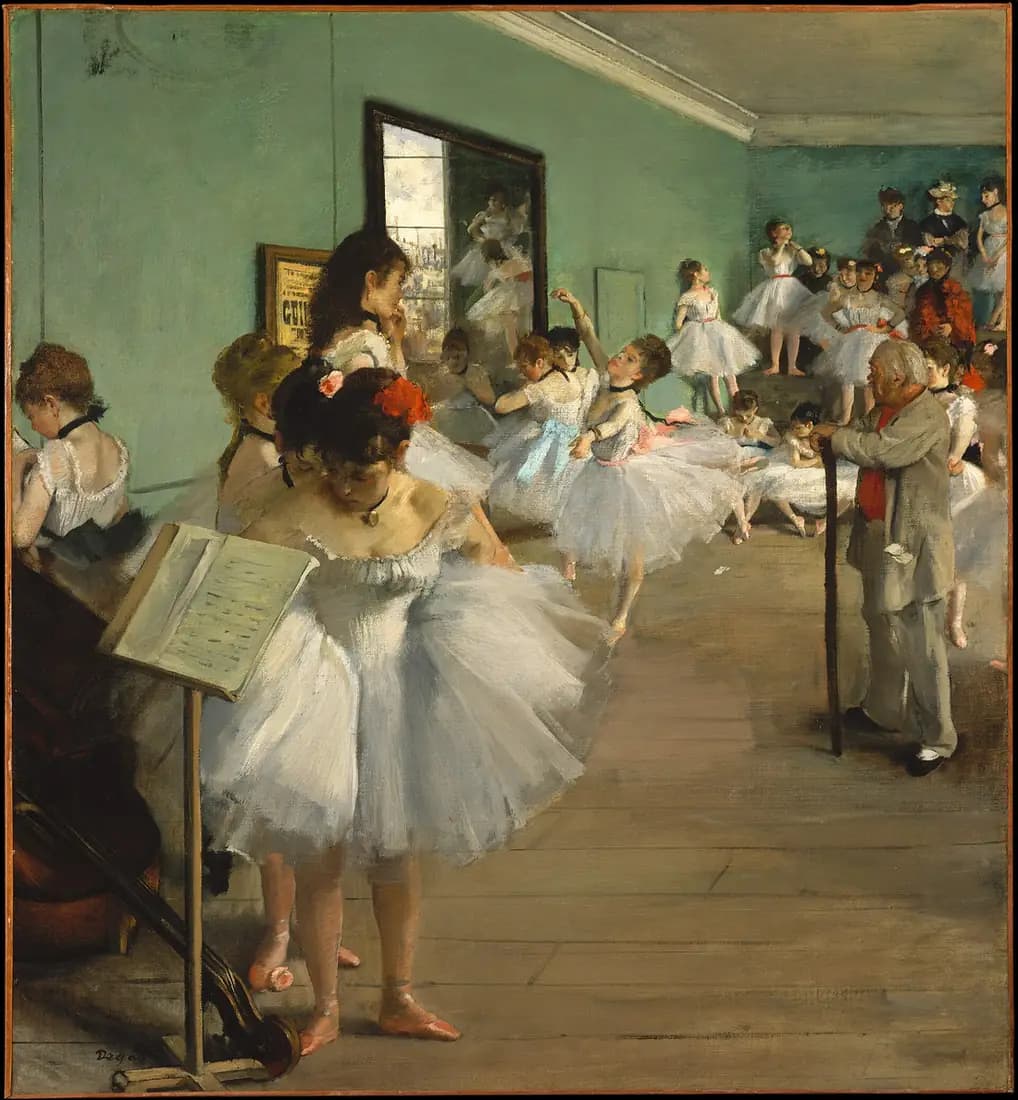
Degas fills the studio with actions that audiences normally do not see. A dancer scratches her back, another fixes a ribbon and others lean or sit. The variety breaks the corps de ballet into individuals while showing the repetitive labour behind coordinated stage movement.
The master at the centre
Jules Perrot stands with a long staff used to beat time on the floor. Once an international ballet star, he taught classes at the Paris Opéra after retiring from the stage. His upright dark figure steadies a composition otherwise full of pale tutus and scattered poses.
A room that feels accidentally cropped
Floorboards and walls race toward a distant corner, while bodies are cut by edges as if the view continued outside the canvas. Degas planned such effects through drawings and studies. The apparent snapshot is constructed, using unexpected empty floor and partial figures to make us feel present inside a working rehearsal rather than seated before a finished spectacle.
Practice is full of waiting
Only one dancer performs for the ballet master. Around her, others stretch, adjust clothing, scratch their backs, talk or watch with uneven attention. Degas makes rehearsal convincing through these unheroic pauses. The class is not a line of identical graceful bodies but a workplace in which discipline includes boredom and repetition.
The room feels casually observed, yet its asymmetry is exact. Floorboards pull toward the back, a cropped foreground figure presses close, and the open centre gives the teacher’s staff and the dancer room to register. Degas drew and recombined poses over time rather than capturing one photographic instant. Apparent spontaneity is the result of construction, with every interruption helping the space feel temporarily occupied.
Sources and further reading
- The Metropolitan Museum of ArtObject record, dancers, Jules Perrot and studio context.
- Musée d'Orsay, Degas at the OperaInstitutional context for Degas's ballet subjects and working methods.