A room simplified after it was painted
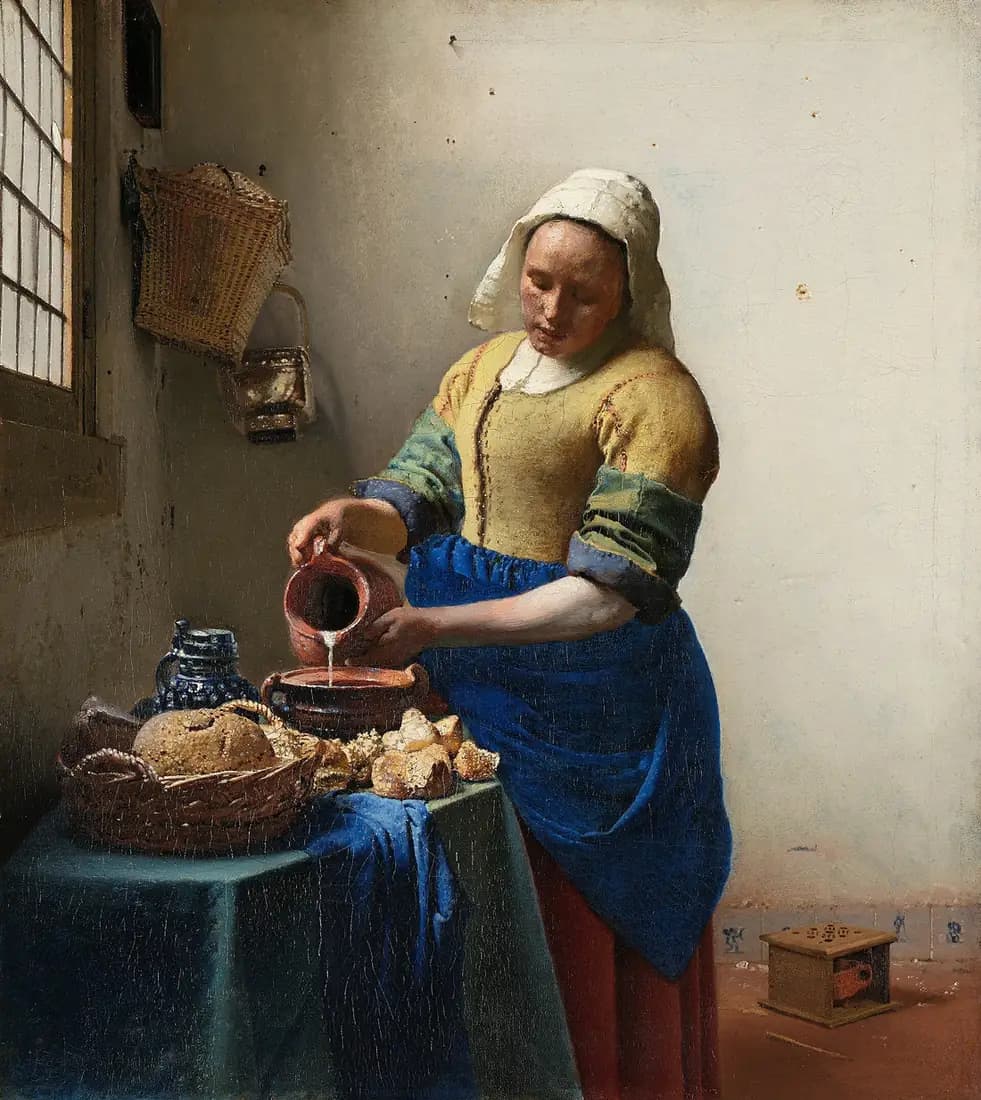
Research has revealed a jug rack on the back wall and a fire basket near the floor beneath the finished surface. Vermeer painted both out. Their removal gives the maid a clearer outline and turns the marked plaster into a quiet field of light rather than a display of household objects.
The only thing moving
The thread of milk falling from the jug is narrow but decisive. Everything else seems held in place: the woman's body, the table, bread, basket and window. Vermeer builds her with strong blocks of yellow, blue and red, giving an everyday task the stability of a monument.
Light that describes touch
Small raised dots of paint glitter on the bread and wicker. They do not reproduce each crumb literally; they translate the sensation of rough surfaces catching sunlight. The broken pane, nail holes and chipped wall receive the same attention. Grandeur comes not from expensive surroundings but from concentrated looking at work, food and ordinary materials.
Stillness built from small changes
The stream of milk is the only obvious action, yet the room contains subtler movement. Light crosses the wall, a foot warmer suggests heat below, bread forms a rough foreground and the woman’s sleeves fold as she steadies the jug. Vermeer lets these different textures meet without making any one of them decorative excess.
Conservation imaging revealed that he simplified the composition while painting. A large object once occupied the wall, and a basket appeared near the floor before both were covered. Their removal gives the woman more space and makes the bare wall an active field of light. The quiet result was not merely copied from life. It was edited carefully so concentration could become the picture’s main event.
Sources and further reading
- Rijksmuseum collection recordObject details, subject and treatment of light.
- Rijksmuseum research discoveriesUnderpainting, removed objects and technical examination.