One view, two kinds of country
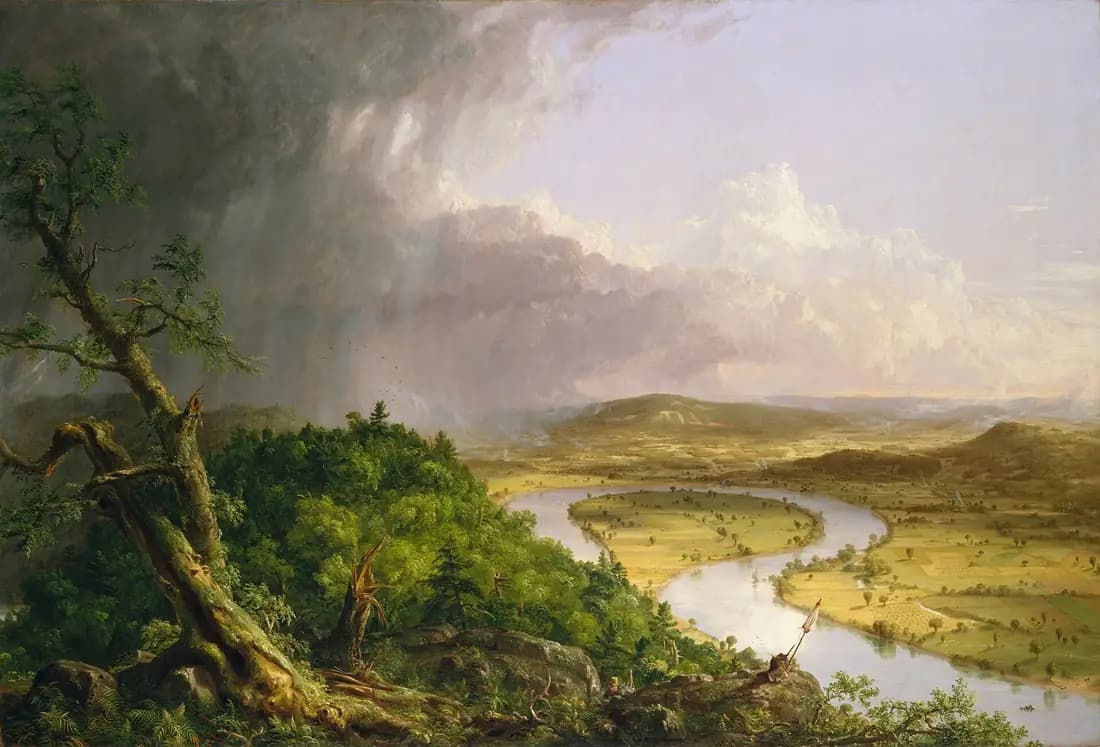
A thunderstorm clings to the wooded slope at left. Across the Connecticut River, ordered fields lie in new sunlight. Cole makes the contrast almost too clear to be accidental: tangled foreground against distant cultivation, broken tree against geometric farms, darkness against release. The river's oxbow holds the two halves together.
The painter turns toward us
Near the lower centre, Cole sits with easel and umbrella on the promontory. He is tiny, but his pale collar catches the eye. The self-portrait marks this as a constructed act of looking rather than an untouched vista. It also puts the artist between the wild slope and the transformed valley.
Beauty with an argument inside it
Cole worried about rapid industrial and agricultural change, yet he also celebrated American scenery. The painting does not reduce that tension to a simple answer. A possible Hebrew word meaning “Almighty” has been read in the distant cleared hills, although scholars debate the marks. What remains certain is the composition's deliberate collision of storm, settlement and sublime scale.
Two landscapes meet at the easel
Cole places himself in the lower centre, a tiny painter with an umbrella and canvas between wilderness and cultivated valley. His presence breaks the illusion that the panorama simply appeared. Someone selected this height, joined changing weather and decided how sharply the two sides should contrast. The artist is both witness to the view and author of its argument.
Follow the Connecticut River into the distance and its broad curve becomes the painting’s calmest shape. Then return to the splintered tree and storm clouds at left, where diagonals push in the opposite direction. The composition does not force a simple choice between dangerous nature and productive land. Cleared fields may signify order, but they also raise the question of how much transformation the valley can absorb.
Sources and further reading
- The Metropolitan Museum of ArtObject record, composition and self-portrait.
- The Met scholarly study of The OxbowDetailed history and iconographic interpretations.