Guide
A Short History of Mahjong Solitaire
The puzzle is young, but its tiles are not. Mahjong solitaire is a computer-age invention that dressed itself in tiles with a century of history behind them.
The tiles: 19th-century China
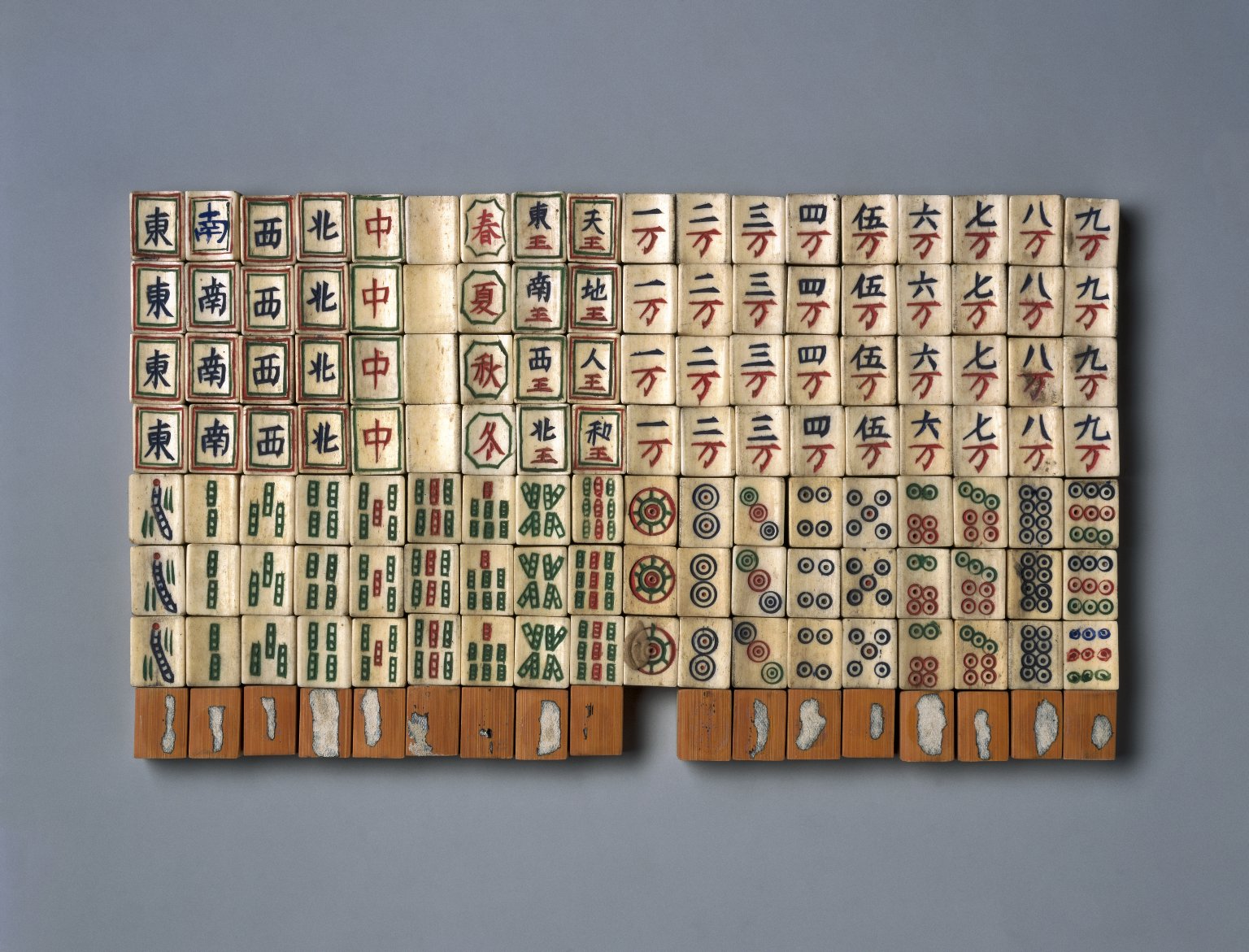
Mahjong the four-player game took shape in China in the 1800s. The bone-and-bamboo pieces below were made in Shanghai in the late 19th century. Look for the circles, bamboo and characters: the family resemblance to today’s tiles is clear, even though early sets were not identical to the modern set.

The puzzle: 1981
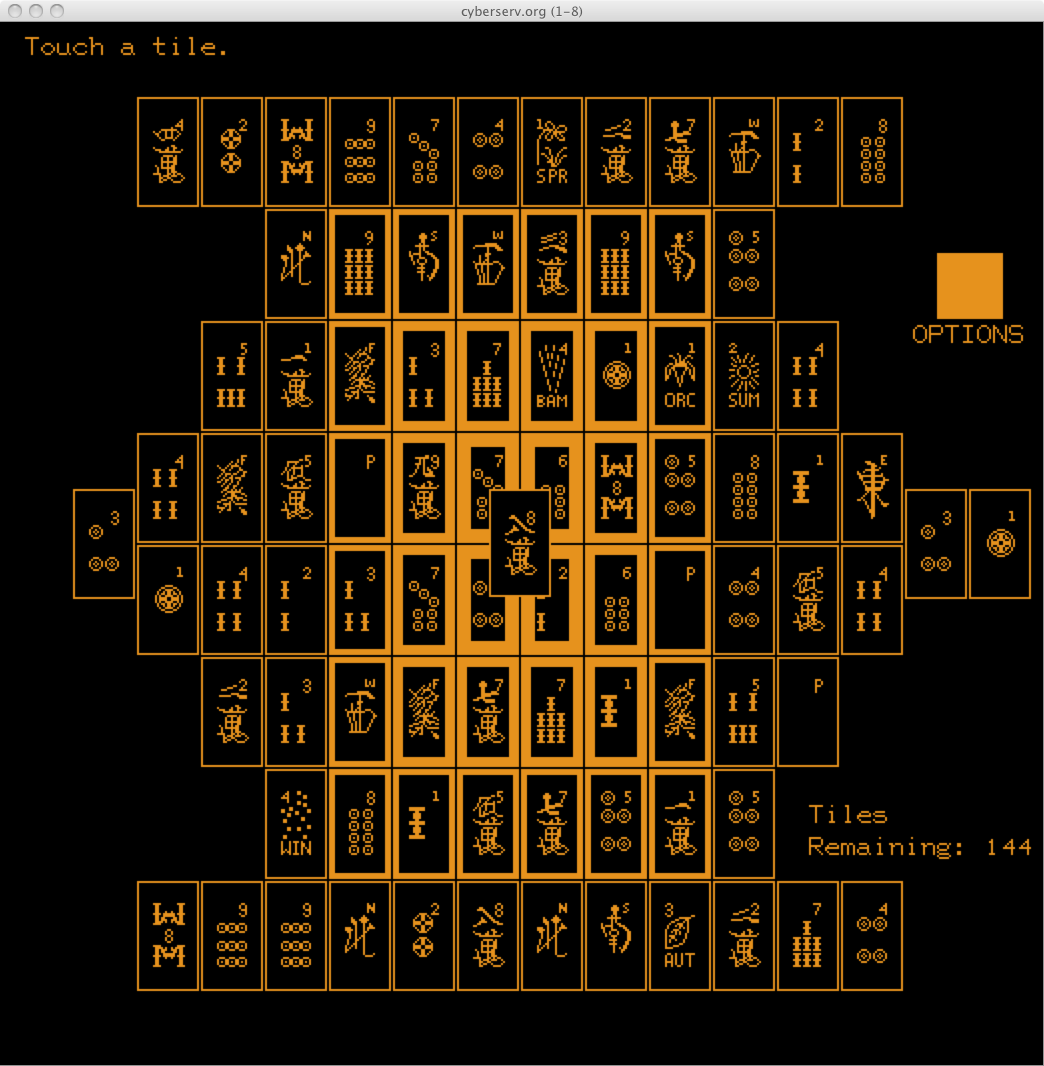
Mahjong solitaire is much newer. Brodie Lockard created Mah-Jongg for the PLATO computer system in 1981. His screenshot below shows the familiar Turtle arrangement: a wide body, a layered center with a single crown tile, and protruding tiles at both sides. The orange outlines look different from modern shaded tiles, but the shape is recognizable.

Shanghai and the boom
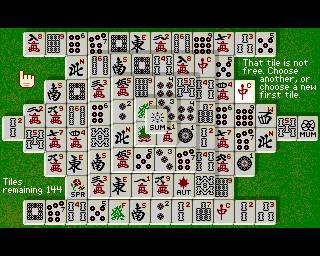
Activision brought the puzzle to home computers with Shanghai in 1986. This Amiga screenshot shows the Turtle again, now with colored faces against a green background. Compare the single center tile and the uneven extensions at the left and right with the PLATO board above: the presentation changes, but the same arrangement remains.
Today
The Turtle also lives on in browser games. Here it is in Mahjong Tide, with our botanical tiles and an art background. You can still trace the same body, crown and side extensions across all three screenshots. The tile order is different in each game; it is the layout that connects them.
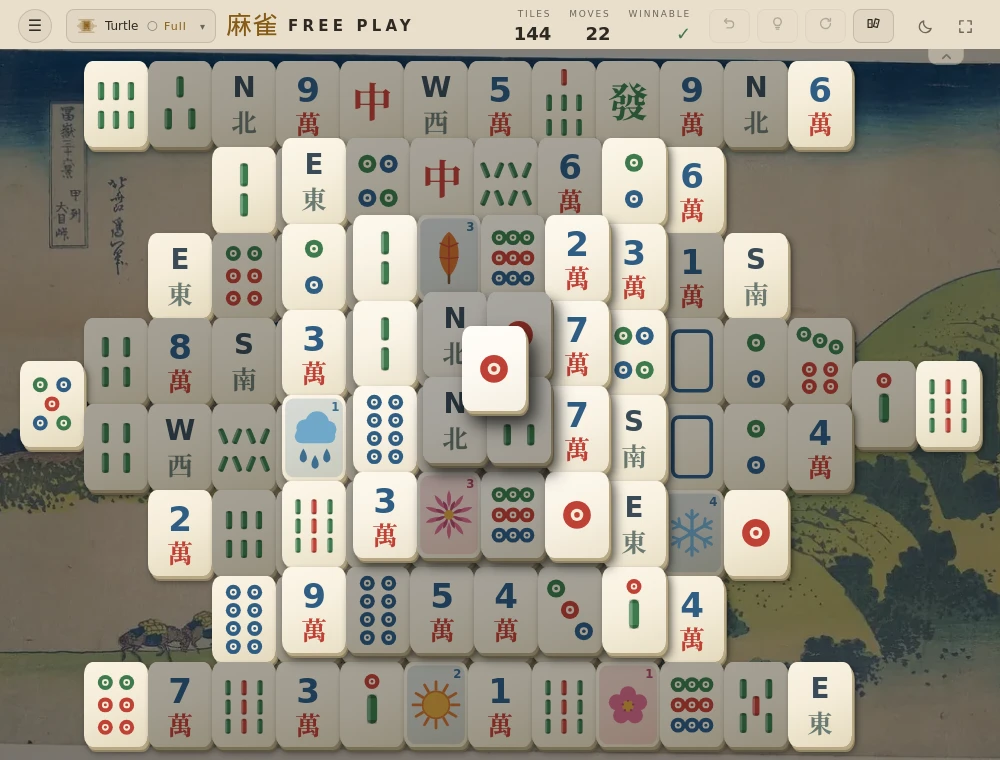
Our deals start with a solution, and Undo lets you explore another route if a move strands the board. For a closer look at this shape, see our Turtle guide.